How to wash and care for batik
Batik is cotton, so people wash it like cotton, and that is where it goes wrong. Natural dyes in particular are alkaline-sensitive, and ordinary laundry detergent is alkaline by design.
Here is what we tell every guest who leaves with a piece.
Washing
By hand, in cool water. No machine, no spin.
No detergent. The traditional agent is lerak — the soapberry, Sapindus rarak. You crush a few nuts in warm water until it goes slightly cloudy and use that. It is sold in every market in Java and in a bottle online. Failing that, plain water is better than detergent.
No soaking. Ten minutes is plenty. Long soaking pulls colour out of the fibre with nothing to hold it.
Do not wring. Press the water out, or roll the cloth in a towel and press. Wringing creases wax-dyed cotton permanently along the twist.
Drying
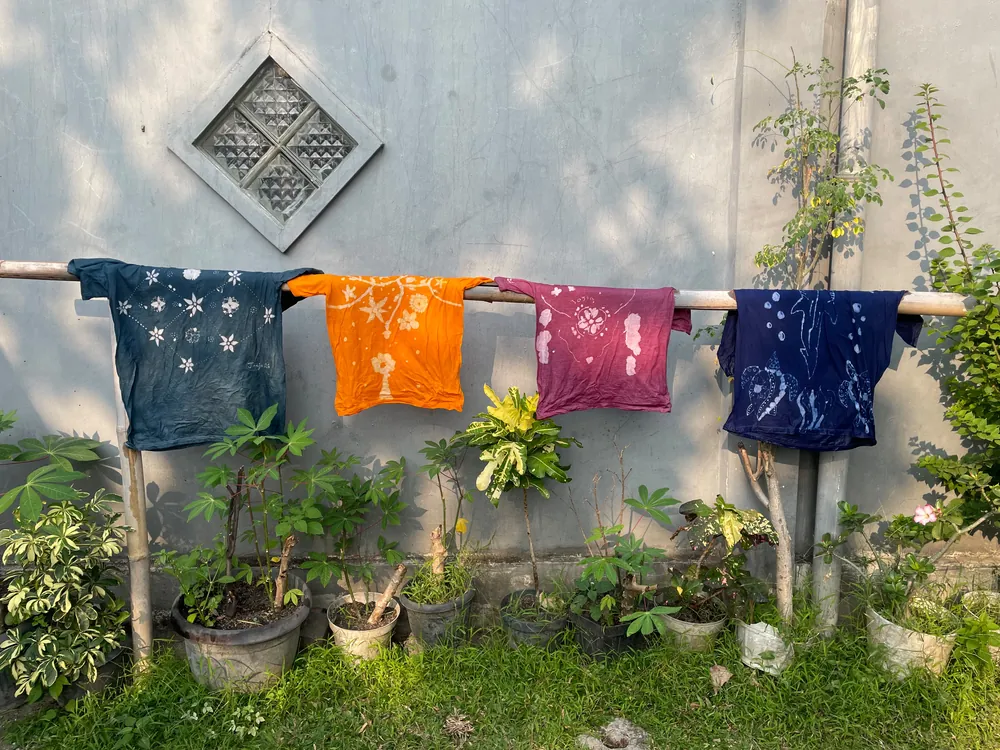
In the shade, always. Direct tropical sun will fade a natural-dyed cloth noticeably in a single afternoon. Hang it over a line rather than pegging it, so there are no clip marks.
Ironing
On the reverse, medium heat, slightly damp. If the piece still has any residual wax — and a hand-made piece sometimes does — a hot iron on the face will melt it into the fibre and leave a permanent shine.
Put a cotton cloth between the iron and the batik if you are unsure.
Storing
Fold along different lines each time, or roll it. A cloth folded on the same crease for years will eventually break along it.
Keep it away from mothballs — naphthalene can yellow natural dye. If you are storing a good piece long-term, roll it in acid-free paper or clean cotton, and let it breathe once or twice a year.
For the piece you make here
Yours is synthetic-dyed and much tougher than a natural-dyed heirloom. Still: first wash separately and by hand, cool water, shade. After that it behaves like normal cotton. The first wash is the one that matters.